What to Do in the First 10 Minutes of a Sewage Backup
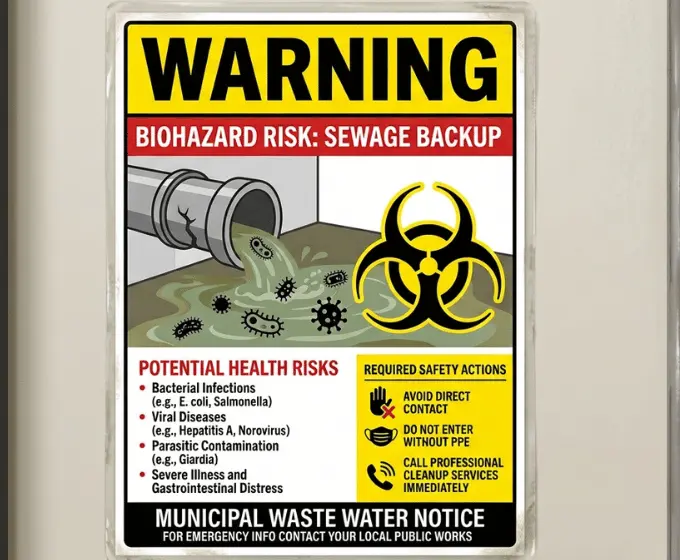
Sewage coming up through a tub or toilet is alarming, and it is easy to grab a mop and start scrubbing. Hold off. The order you do things in matters for your health, for how far the damage spreads, and for your insurance claim.
Minute 1 to 3: stop adding water
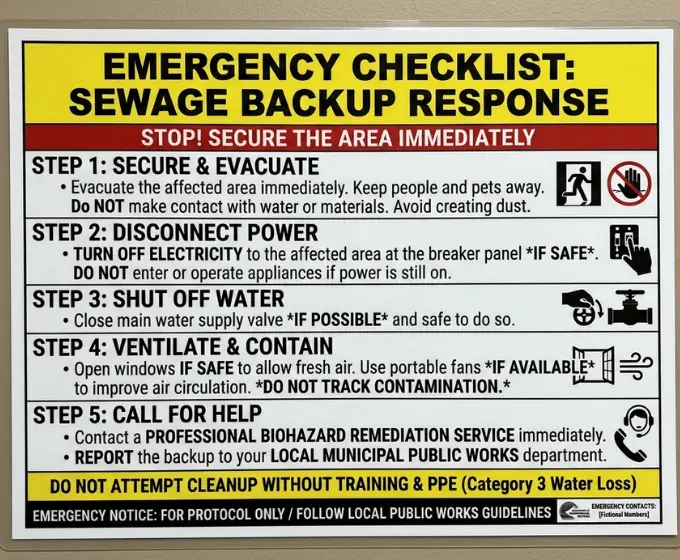
Tell everyone in the house to stop flushing, showering, and running sinks, and turn off the washing machine and dishwasher. When the main line is blocked, every gallon that goes down any drain comes back up at the lowest one. If a toilet is overflowing, turn the shutoff valve behind it clockwise.
Minute 3 to 5: get people and pets out
Keep children, pets, older adults, and anyone who is pregnant or has a weakened immune system away from the area. Close the door to the room if you can. If you have to walk near the water, wear rubber boots and gloves.
Minute 5 to 7: check for electrical risk
If water is near outlets, extension cords, a water heater, or the breaker panel, do not wade through it. Switch off power to the area only if you can reach the panel while standing somewhere dry. If you cannot, leave it and tell the plumber when they arrive.
Minute 7 to 10: document and call
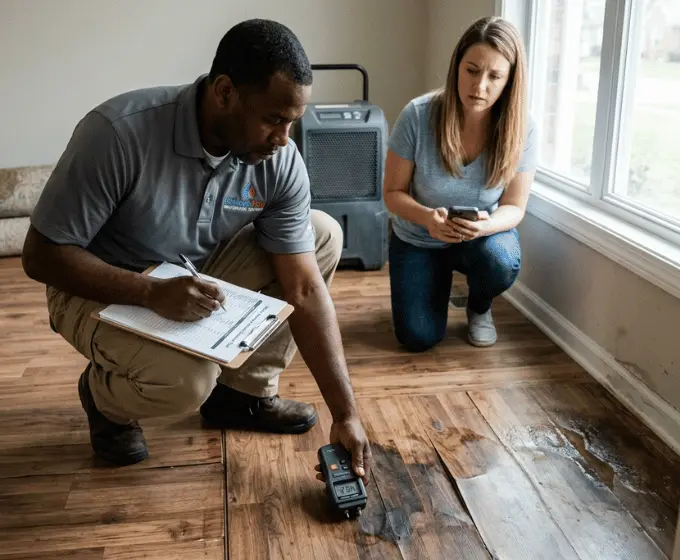
- Take photos and video of the water, the fixture it came from, and damaged items.
- Call a licensed plumber to clear the line. The cleanup cannot start until the flow stops.
- If neighbors have backups too, or a manhole is overflowing, report it to the City of Garland through its water and wastewater page. It may be the city main.
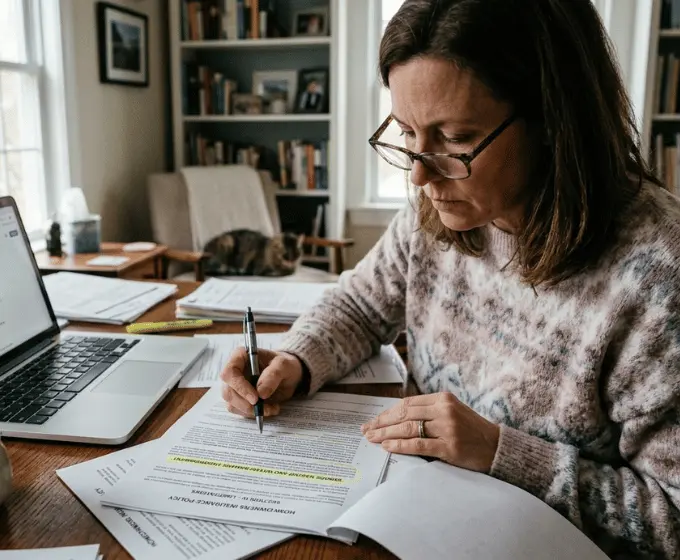
- Call your insurance company to open a claim.
What not to do
- Do not mix bleach with ammonia or acidic cleaners. The combination releases toxic gas.
- Do not run a household vacuum or shop vac on sewage. It can spread contamination into the air and the machine.
- Do not run fans aimed at wet sewage areas before cleanup; they move contaminated droplets and odor around the house.
- Do not throw out damaged items before photographing them for your insurer.
After the plumber leaves
Once the line is clear, the sewage that already came inside still has to be dealt with. Anything porous it soaked into, such as carpet pad and the bottom of drywall, usually has to be removed. Read more about what a proper sewage backup cleanup includes, or see our main guide to sewage cleanup in Garland.