Sewage Backup Cleanup in Garland, TX
Sewage that backs up through a toilet, tub, or floor drain is Category 3 water. Cleaning it properly means removing what it soaked into, not just mopping the surface.
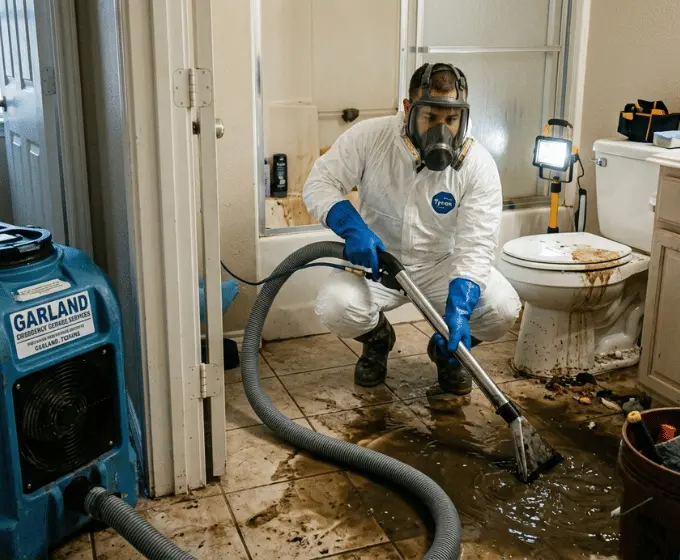
A sewage backup happens when wastewater cannot flow out through the sewer line and comes back up at the lowest drain in the house. In Garland that is usually a shower, tub, or first-floor toilet, since most homes sit on slabs rather than basements. The water that comes up is classified as Category 3 under the IICRC S500 standard, meaning it is grossly contaminated and unsafe to touch.
The cleanup itself is a separate job from fixing the pipe. A plumber stops the backup. A cleanup provider then contains the area, removes contaminated materials, disinfects what can be saved, and dries the structure so mold does not follow. If the backup keeps coming back, have the line inspected with a camera before paying for repairs to finished surfaces.
Common causes in Garland homes include tree roots in older clay or cast iron service lines, grease buildup from kitchen drains, "flushable" wipes, and sags in the pipe caused by shifting clay soil.
Warning signs
- Gurgling from toilets or drains when another fixture runs
- Water rising in the tub or shower when you flush
- Several slow drains at the same time
- Sewage smell near drains or the main cleanout
- Dark water around a floor drain or cleanout cap
Health & property risks
- Bacteria including E. coli and Salmonella
- Viruses including hepatitis A and norovirus
- Hydrogen sulfide gas and strong odor in closed rooms
- Mold on wet drywall and framing within 24 to 48 hours
What a proper cleanup includes
- 1
Stop the source
A plumber clears or repairs the line so no more sewage enters the home.
- 2
Containment
The affected area is sealed off with plastic sheeting, and air filtration keeps contaminants from spreading to clean rooms.
- 3
Extraction
Standing sewage and solids are pumped or vacuumed out and handled as contaminated waste.
- 4
Removal of porous materials
Carpet, pad, the lower portion of drywall, baseboards, and insulation that sewage touched are removed and bagged.
- 5
Cleaning and disinfection
Remaining hard surfaces such as framing, slab, and tile are cleaned and treated with an EPA-registered disinfectant.
- 6
Drying and verification
Air movers and dehumidifiers dry the structure, and moisture readings confirm it is dry before any rebuild.
Equipment commonly used
Sewage Backup Cleanup questions
Answers to common questions about this type of cleanup.
Usually only when your policy includes a water backup or sewer backup endorsement. Standard policies commonly exclude it. Check your policy and photograph the damage before anything is removed.
Extraction, removal, and disinfection of a typical residential backup often take one to three days. Drying can add several days depending on how far the water spread.
In most cases no. Carpet and pad soaked with sewage cannot be reliably disinfected and are normally removed. Hard floors like tile or sealed concrete can usually be cleaned and disinfected.
Related services
Black Water Cleanup
Cleanup for grossly contaminated water such as sewage, toilet overflows with waste, and outside floodwater.
Odor Removal
Finding and removing the source of lingering sewage odor after a backup, then deodorizing the space.
Drain Cleaning
How to tell a single clogged drain from a main line problem, and what to do if sewage gets inside.
Dealing with a sewage backup in Garland?
Call our 24/7 line and we will connect you with an available local cleanup provider. Ask them about pricing, timing, and insurance before any work starts.
Garland Sewage Cleanup is a referral service, not a cleanup contractor.